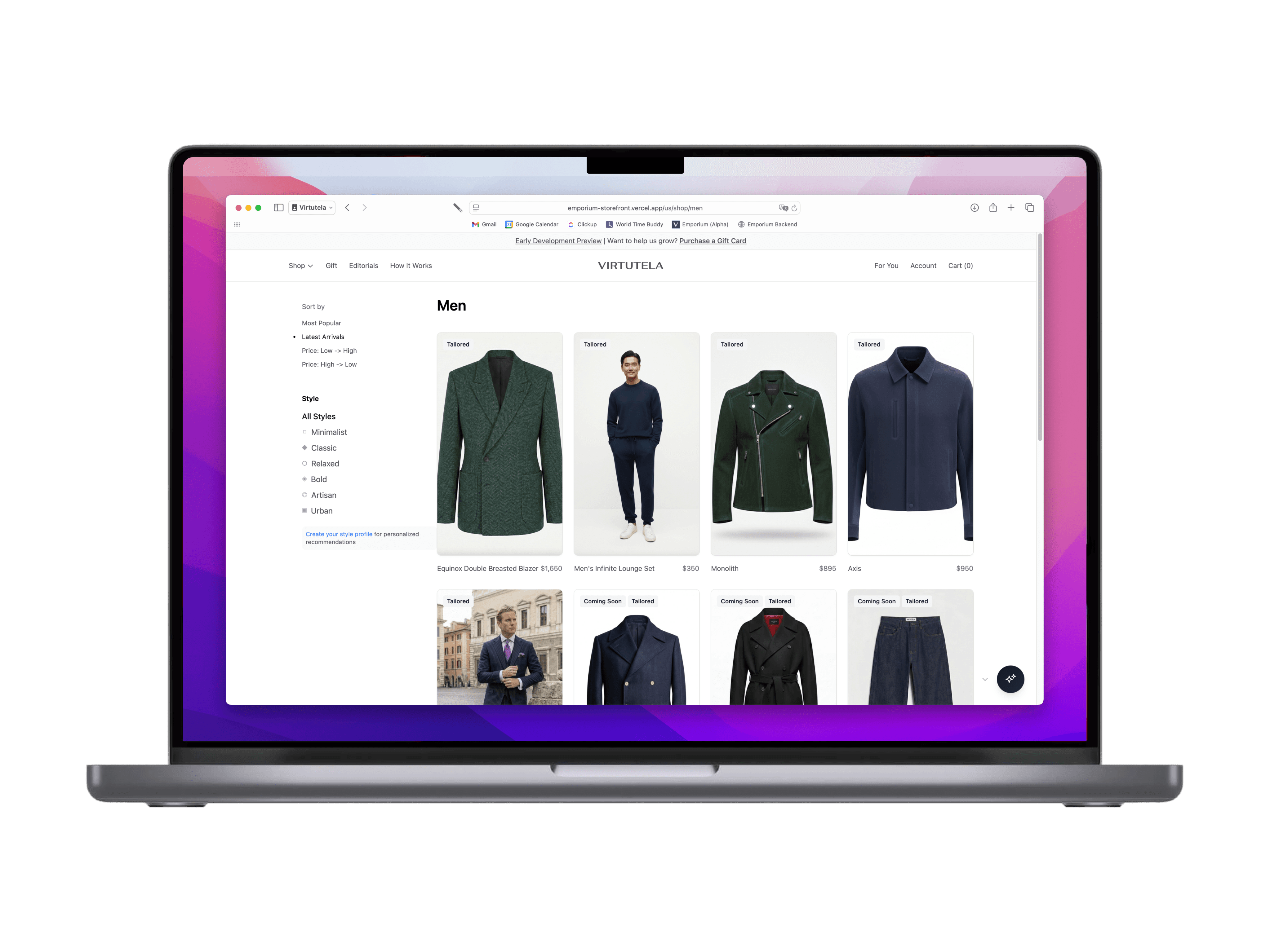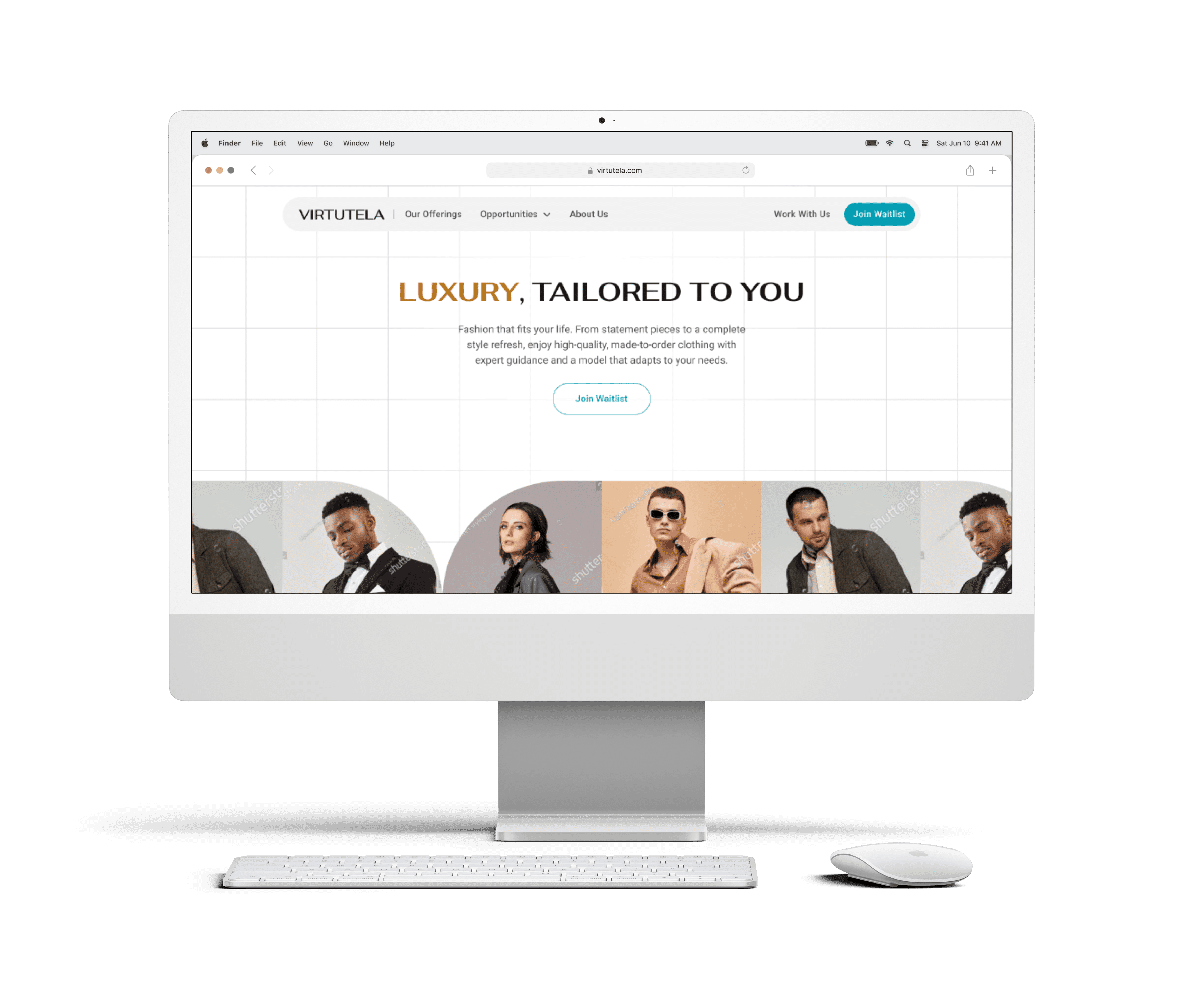
Virtutela — From Business Strategy to Web Presence
Product Design Lead
Project Year
Summary
Translated early-stage business strategy into a web presence that spoke to three distinct audiences
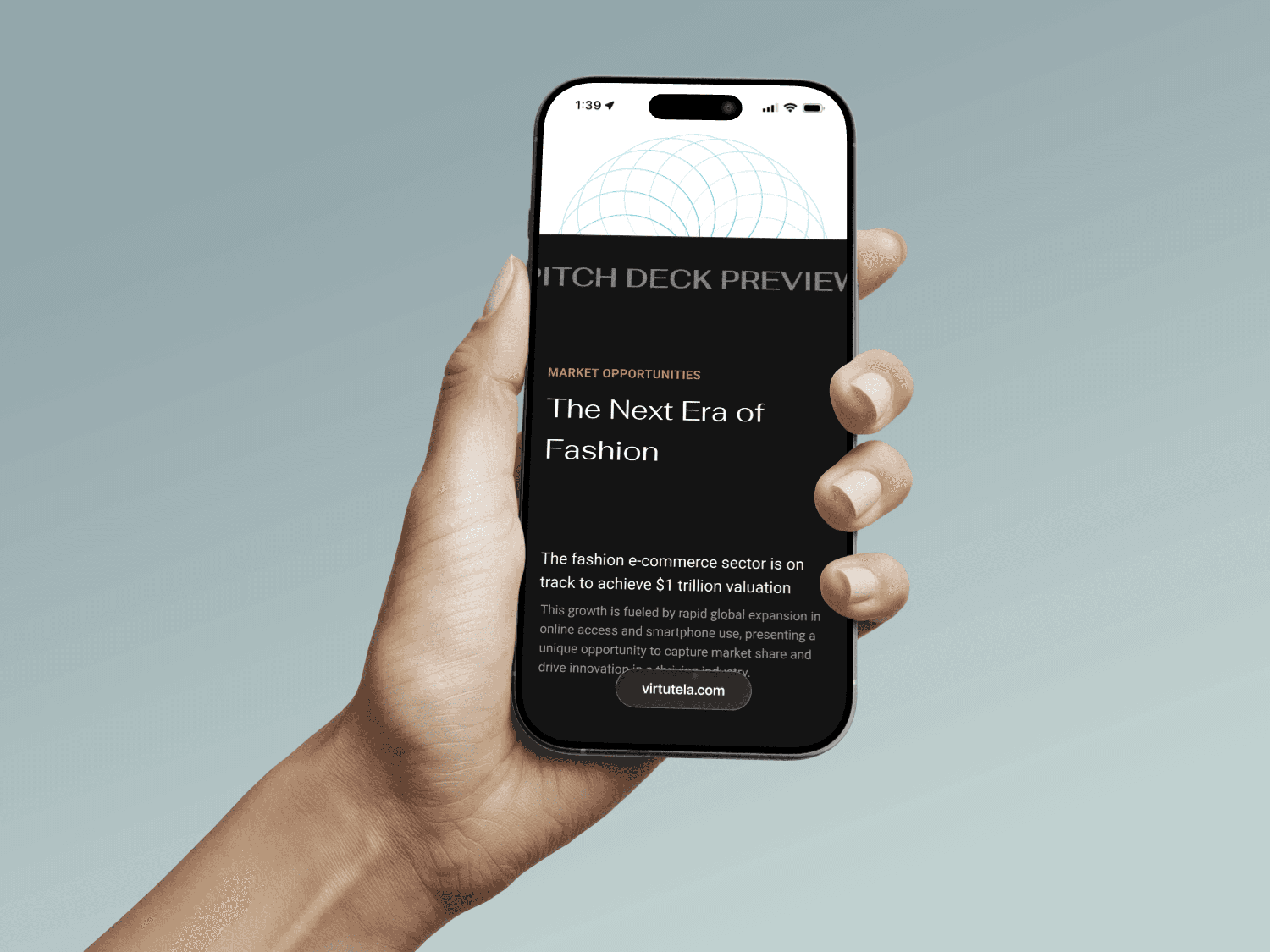
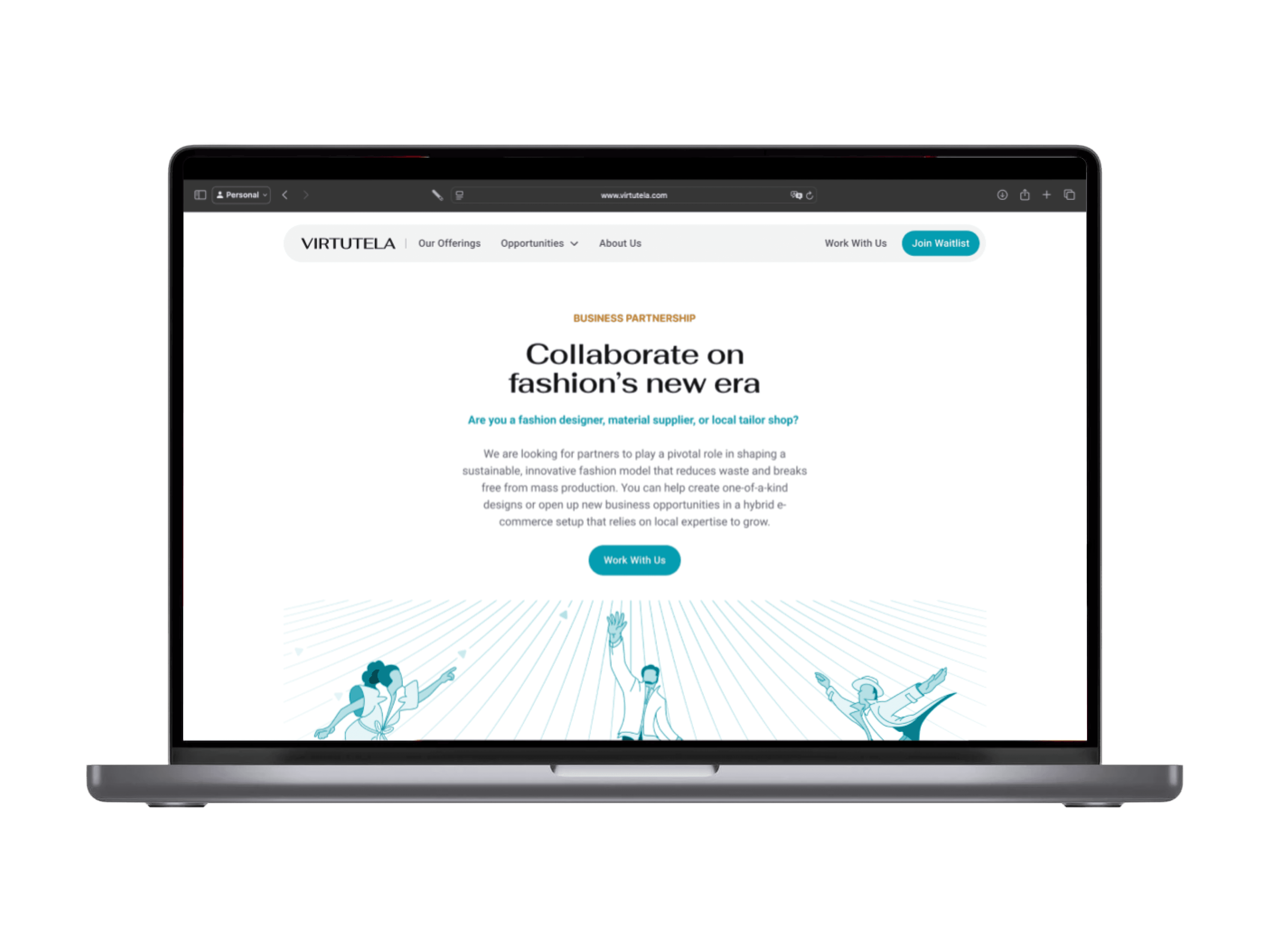
Before Virtutela had a product to show, it needed a web presence that could do three jobs at once: build customer anticipation, signal credibility to investors, and attract brand partners to an unproven platform.
I translated the early-stage business strategy — personas, value propositions, and positioning — directly into a landing page designed to speak to all three audiences without losing any of them.
Challenge
Designing for three distinct audiences before the brand or product had fully taken shape

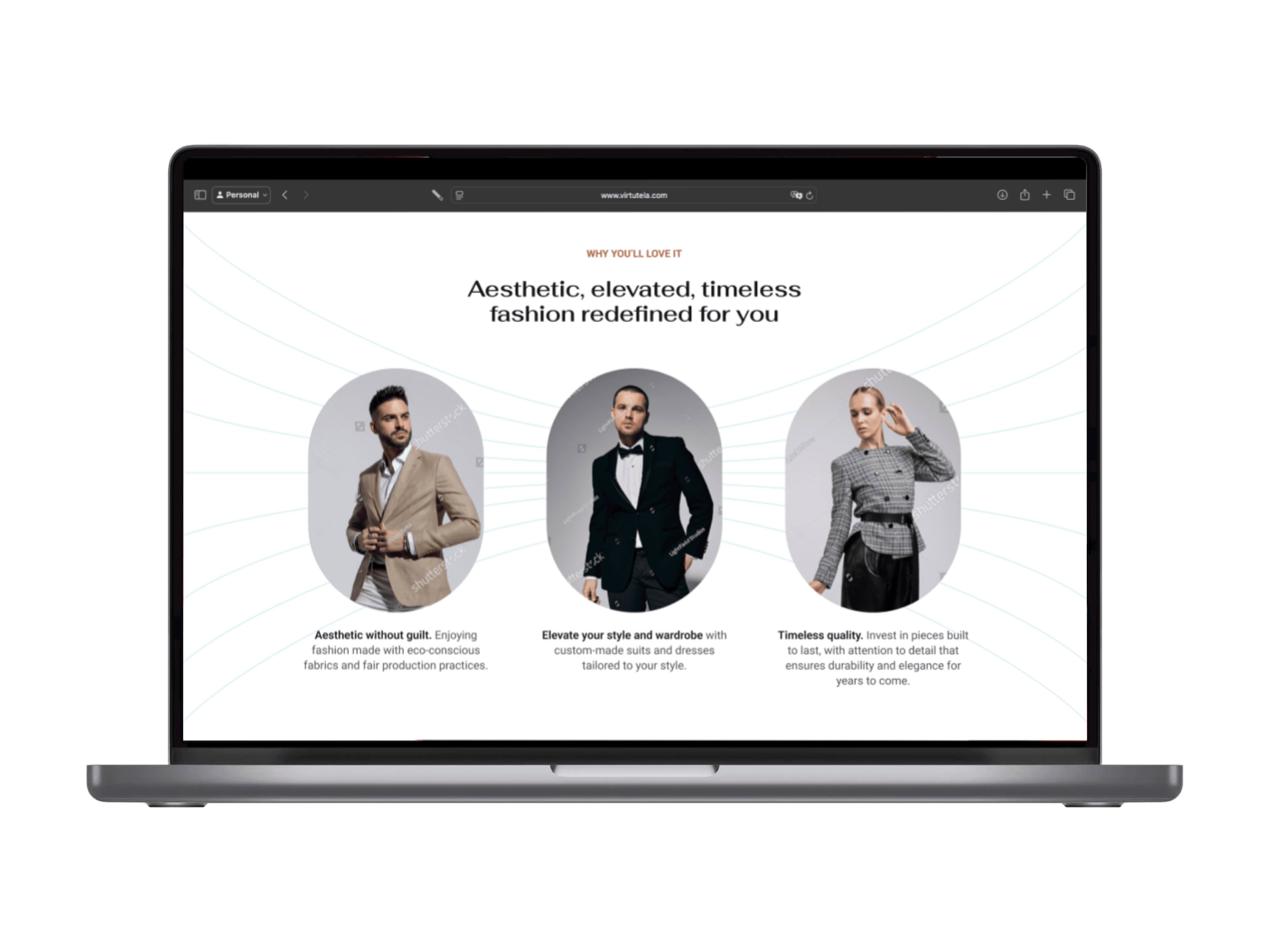
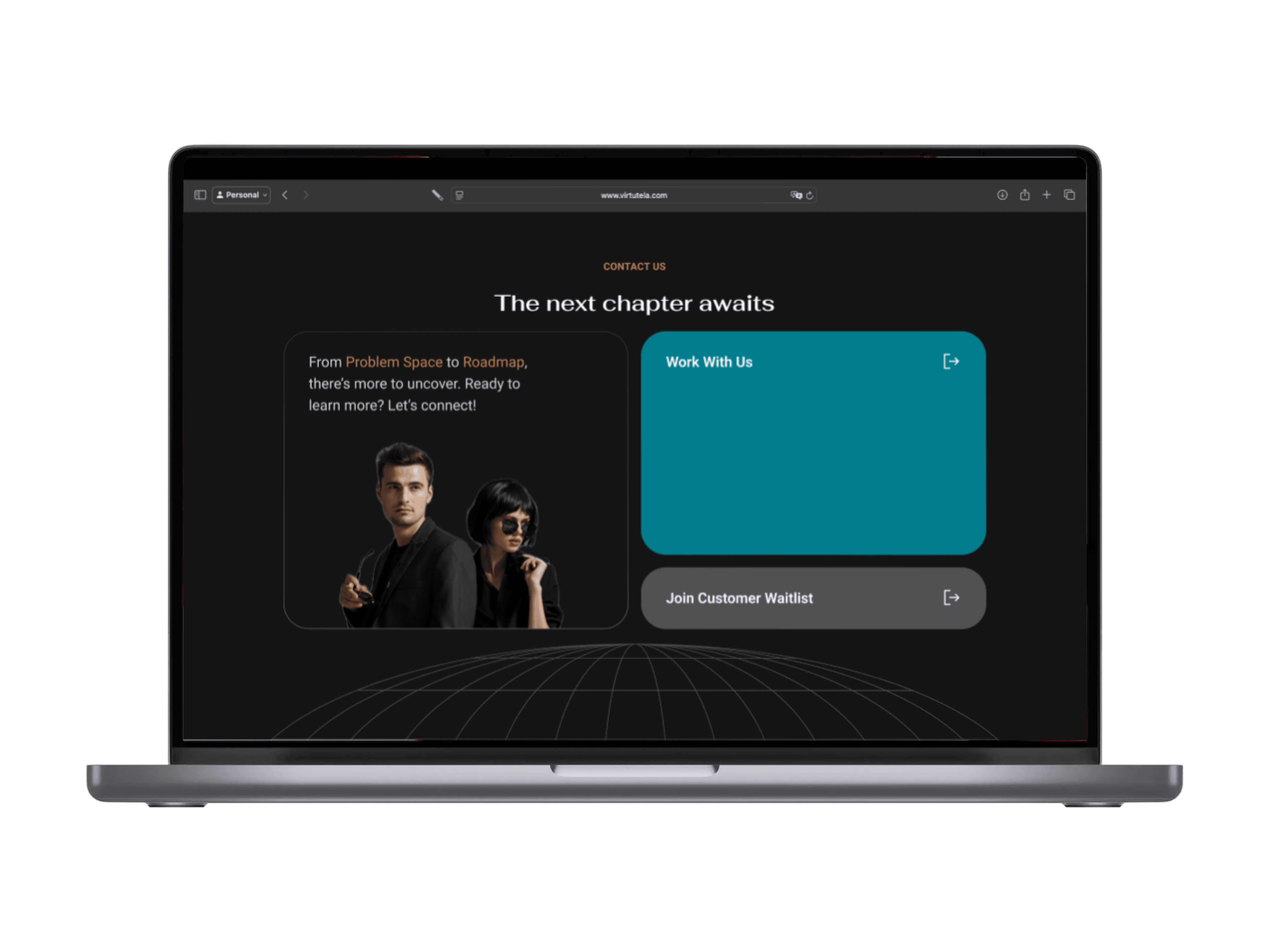
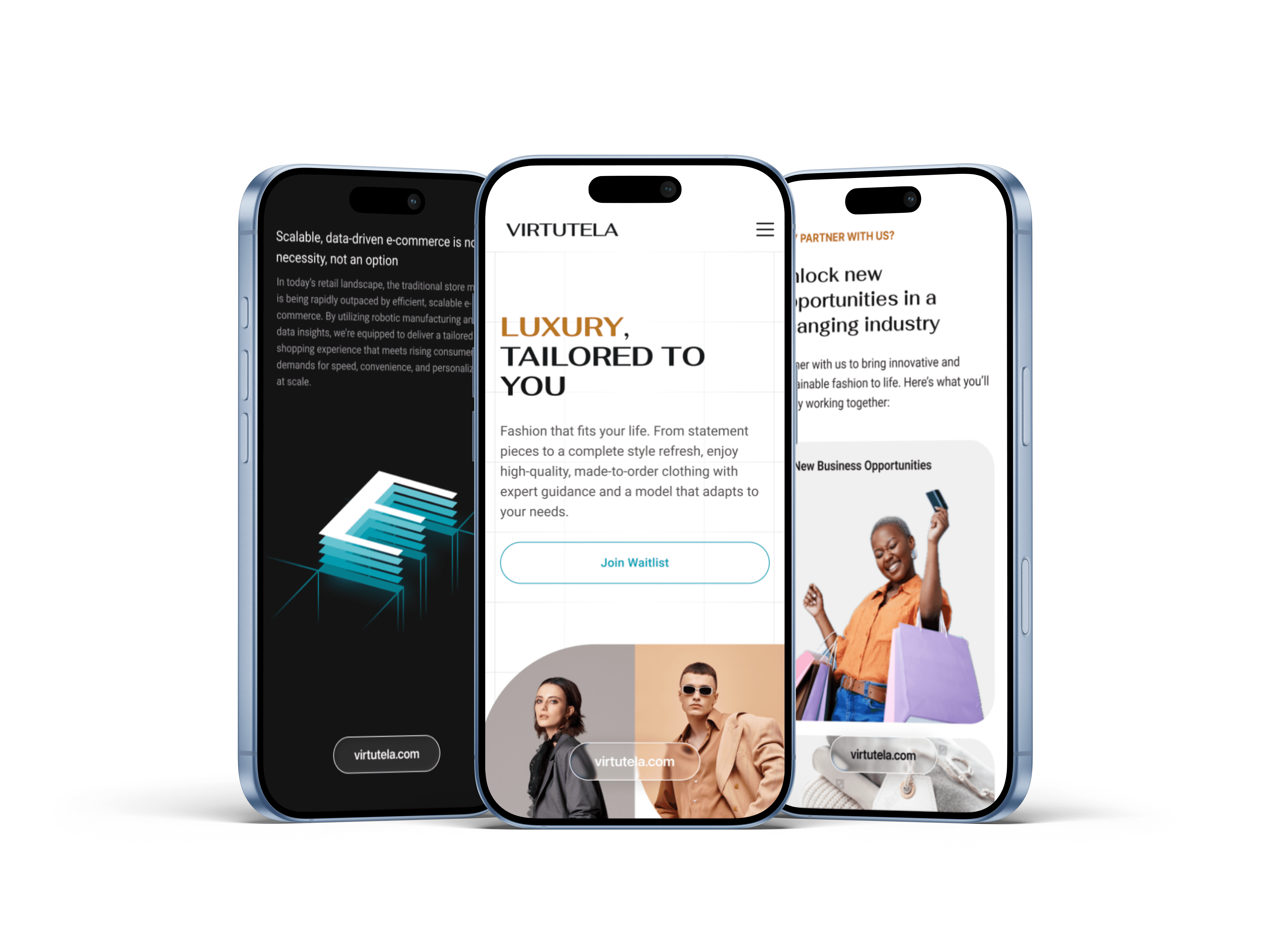
Starting From Strategy, Not Aesthetics
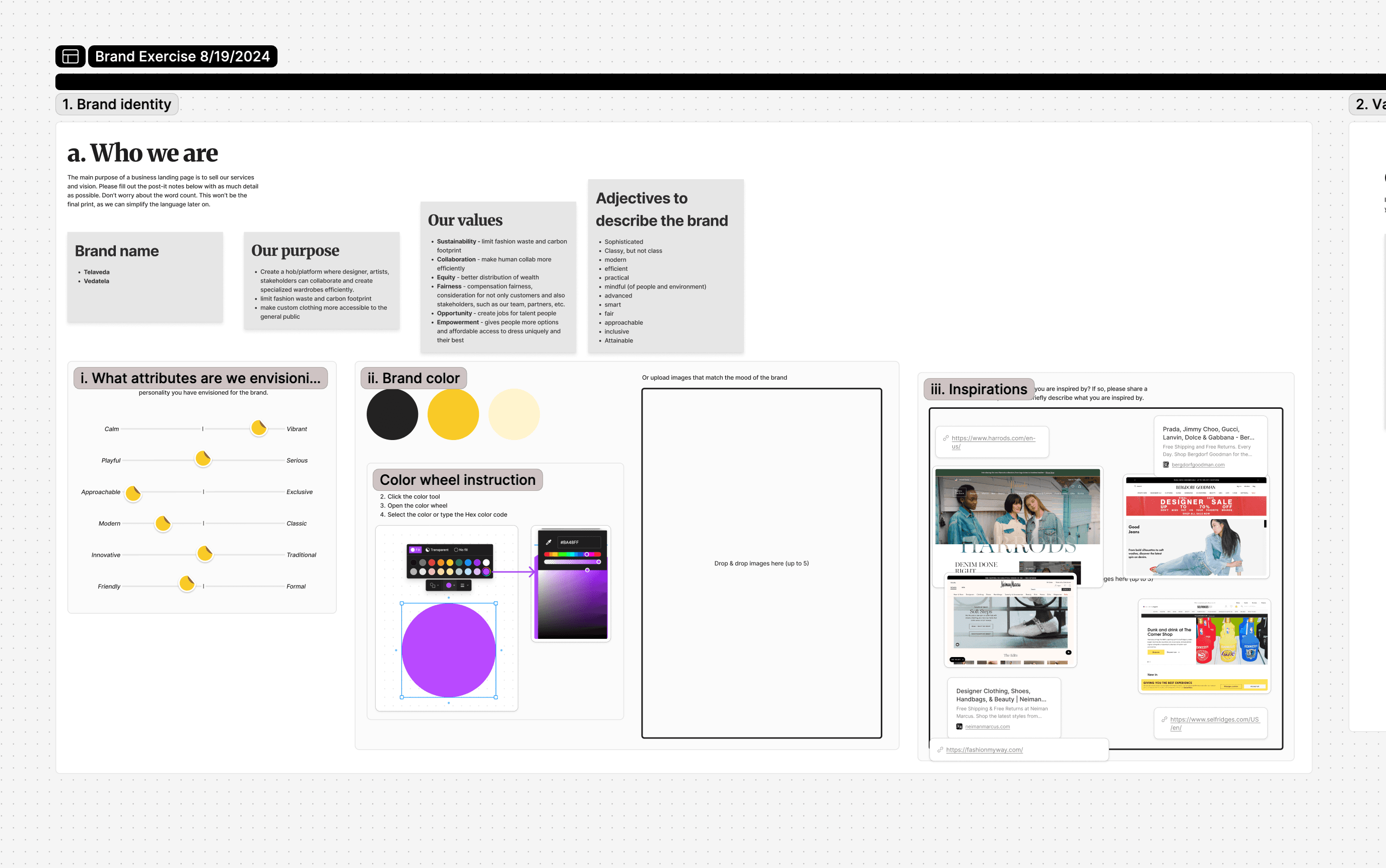
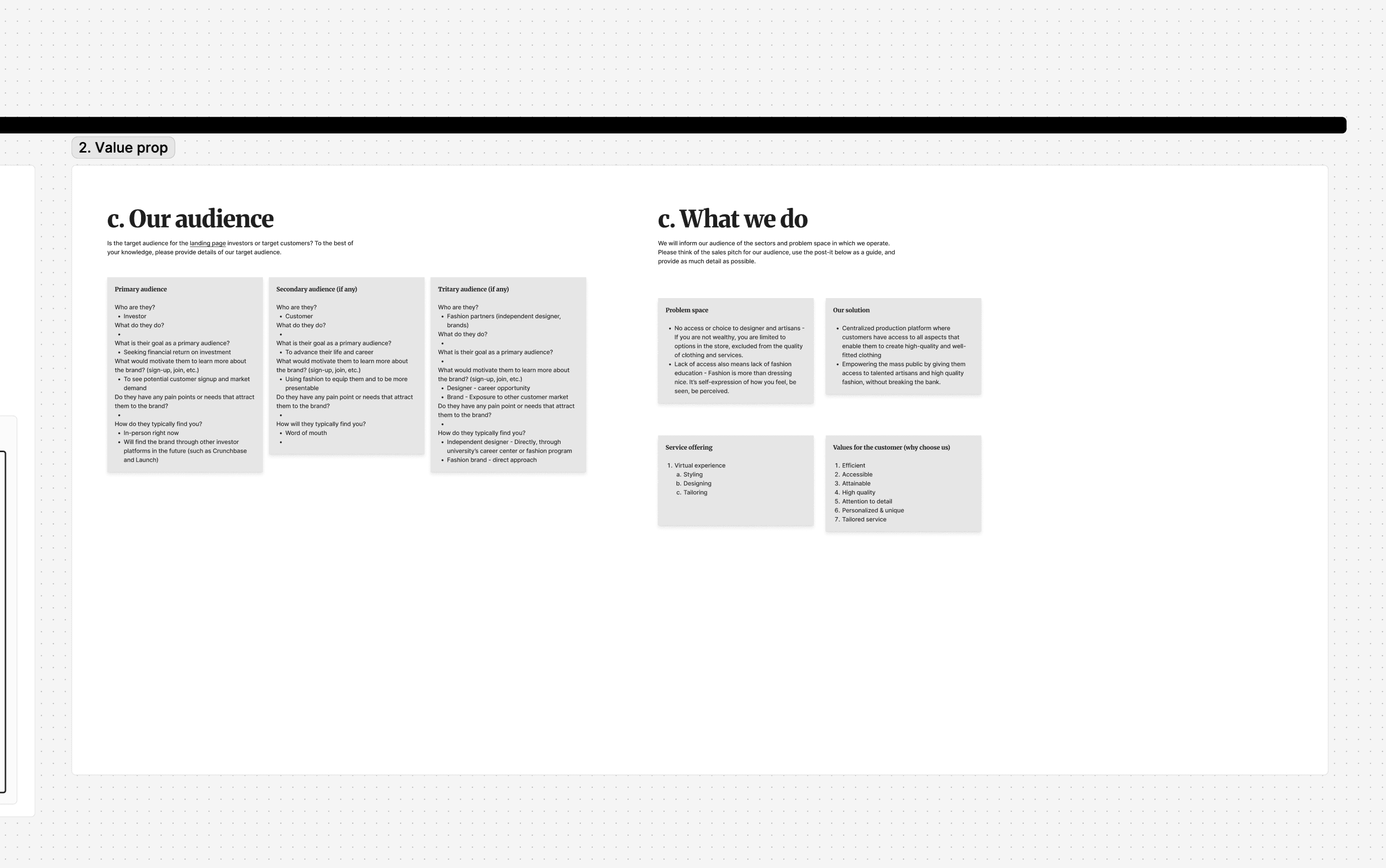
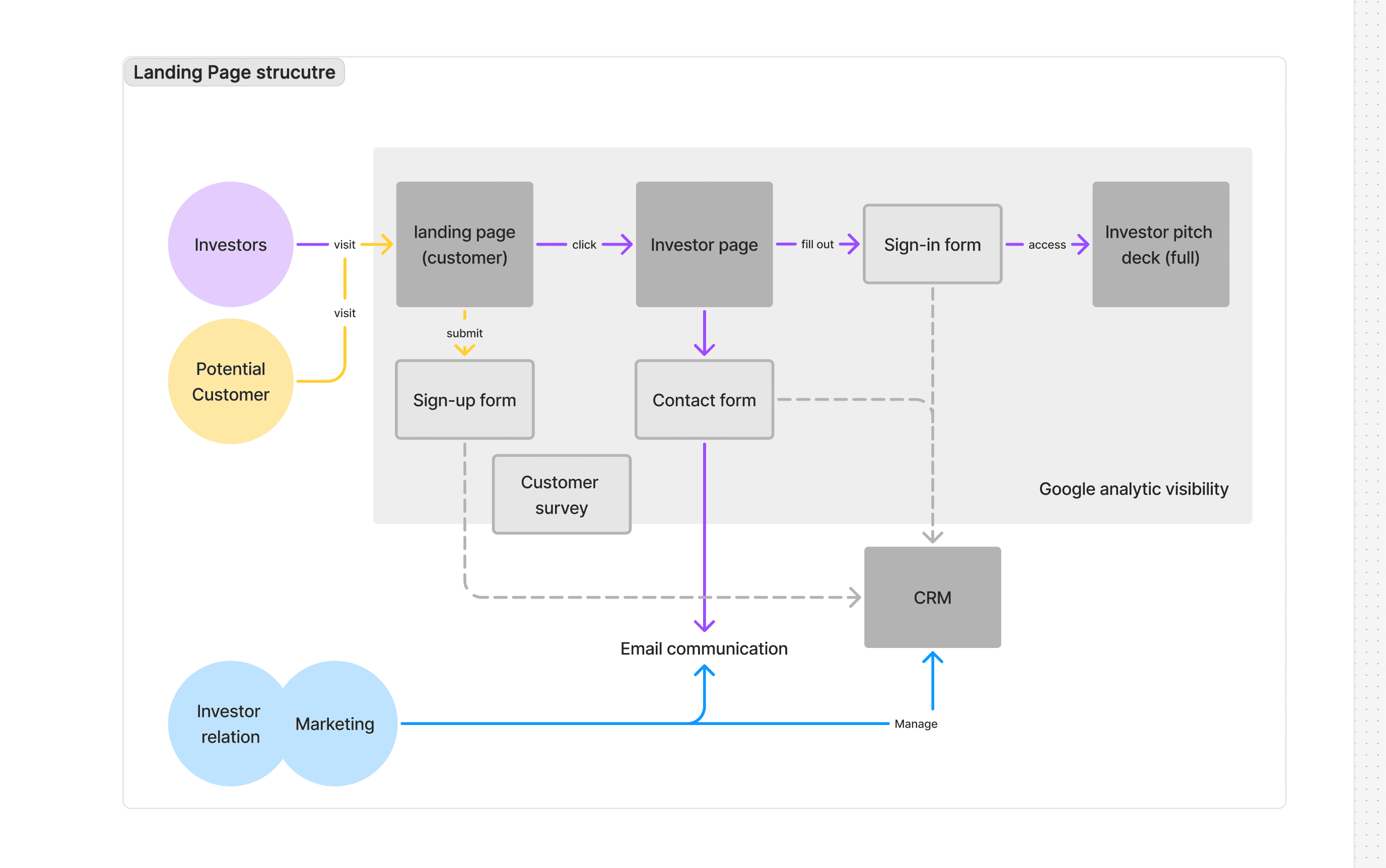
Content hierarchy and audience mapping came before a single layout was considered
The design didn't start in Figma. It started with the positioning work. We aligned on our marketing target audience, built a service blueprint, and defined a value proposition framework — all developed in parallel with the platform build.
I mapped each audience's primary question against the business's core value propositions:
What does each audience need to know about Virtutela before they take action?
What is the right call to action for each?
Where do their needs overlap, and where do they diverge?
This gave me a content hierarchy to design from confidently — before a single layout was considered. To reserve engineering resources for platform development, I made the deliberate decision to own the web build end-to-end — developing production-ready marketing copy with Claude, designing in Figma, and building in Webflow — eliminating developer dependency from the web presence entirely.
Imbedding Market research
Turned the waitlist into an active research instrument through embedded surveys and partner forms
The landing page was designed as a strategic data collection touchpoint — not just a brand surface. A customer survey embedded in the waitlist flow and a partner contact form turned every signup into a research signal.
The data validated our core thesis: Sizing inconsistency frustrated 53% of shoppers, ill-fitting clothes mostly get returned or abandoned rather than fixed, and 62% of customers would wait 3+ weeks for custom-made clothing. Fit is broken, existing solutions don't resolve it, and customers will wait for something that does.
What I'd Do Differently
Audience-specific entry points would have produced cleaner signal on what was actually landing
With more runway, I would have built distinct entry points for each audience — separate landing routes with tailored messaging — rather than optimizing the site for all three.
The current approach was the right call under time and resource constraints. But audience-specific conversion paths would have given us cleaner signal on which value propositions were actually resonating with each group, and better SEO as a byproduct.